
Plenary Speakers
We’re excited to announce our confirmed plenary lineup for the SETAC Asia-Pacific 15th Biennial Meeting in Tsukuba. Each will feature a thought-provoking talk by distinguished leaders.
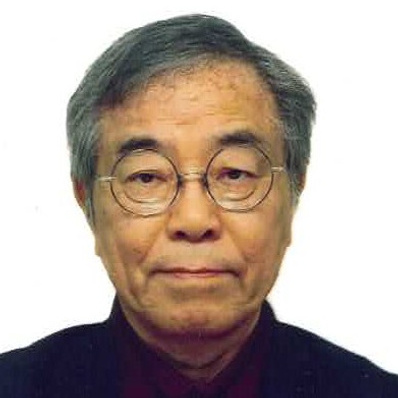
Taisen Iguchi
Taisen Iguchi is Specially Appointed Professor at the Graduate School of Nanobioscience at the Yokohama City University in Japan. He is a globally recognized pioneer in endocrine disruption science whose research has fundamentally reshaped our understanding of how endocrine-disrupting chemicals alter developmental processes in wildlife and humans. Through advanced in vivo, in vitro and genomics-based approaches, he has elucidated the molecular and physiological mechanisms underpinning hormonal disruption, contributing to the scientific foundation of modern environmental toxicology.
Beyond his scientific contributions, Iguchi has played a defining role in translating mechanistic toxicology into international regulatory frameworks. As former President of the Japan Society for Endocrine-Disrupting Chemicals, Chair of Ministry of the Environment committees in Japan, and Chair of OECD working groups developing test guidelines, he has strengthened global chemical risk assessment systems. His work exemplifies SETAC's mission to advance environmental science and science-informed decision-making across toxicology, risk assessment and policy implementation.
Plenary Talk
The issue of environmental endocrine disruptors (EDCs) was raised by Theo Colborn (Wingspread Meeting, 1991; Our Stolen Future, 1996). Since 1998, governments of many countries and the OECD began to tackle EDCs issue in 1988. The OECD started to develop test methods to assess EDCs. Regarding human health effects, several rodent tests including the Uterotrophic Bioassay (TG440), the Hershberger Bioassay (TG441), and the Extended One-Generation Reproductive Toxicity Study (TG443) have been developed. While regarding wildlife, the Fish Short-Term Reproduction Tests (TG229), the Medaka Extended One-generation Test (TG241), the Amphibian Metamorphosis Assay (TG231) and the Larval Amphibian Growth and Development Test (TG242), the Daphnia magna Reproduction Test (TG211) and several short-term assays using transgenic animals (TG248, 250, 251, 252) have been developed. In Japan, based on substances detected in the environmental surveys, EDCs have been identified using following procedures: 1) literature surveys and reliability assessment, 2) identification of hormonal activity using in vitro reporter gene assays, 3) short-term in vivo tests, and long-term in vivo tests. Historical background of the EDCs problem, the efforts being made by the Ministry of the Environment of Japan, and the current status of evaluation of potential EDCs will be explained. This presentation will help “Re-thinking Environmental Balance for the Future”.

Carolyn Brumley
Carolyn Brumley is a senior principal risk assessor at Senversa and an active member of the Australasian Land & Groundwater Association (ALGA), where she has chaired the Risk Assessment Specialist Interest Group. She also serves on environmental auditor and contaminated land advisory panels in Australia. She is an experienced environmental scientist specializing in ecological and human health risk assessment and the management of contaminated land and groundwater systems. Her work focuses on translating environmental science into practical risk assessment frameworks and regulatory decision-making.
With extensive experience in the assessment and management of complex contaminated sites, Brumley has contributed to the development and application of environmental risk assessment approaches across Australia, including work related to emerging contaminants such as PFAS and the implementation of national site contamination frameworks.
Her work bridges science, policy and practice, demonstrating how ecological and human health risk assessment can support evidence-based environmental management and remediation strategies. Brumley's experience provides valuable insight into how scientific understanding is applied in regulatory frameworks and environmental decision-making.
Plenary Talk
Ecological Risk Assessment of PFAS: Lessons from Australia
Ecologically-based guideline values for PFAS in Australia have been refined over the last ten years to incorporate the evolving literature on the effects of PFAS exposure on ecological receptors. Australia has also generated its own unique ecological dataset of PFAS exposure, through comprehensive investigations at Defence, Airport, and industrial sites, as well as monitoring of ambient waters. Australia is one of the few nations to consider whether guideline values based on aquatic toxicity tests are protective of higher order organisms (i.e., birds and mammals that eat aquatic foods). In addition, assessment work on Australian groundwater is generating a growing database on exposure of subterranean fauna (e.g., stygofauna) to PFAS, requiring consideration of the effects of PFAS on these unique species.
This presentation will discuss the information and data that has been gathered in Australia on the exposure of ecological receptors to PFAS, and how this data has shaped the application of ecologically-based guideline values. The presentation will include some lessons learned in Australia with respect to the development and application of PFAS guideline values.
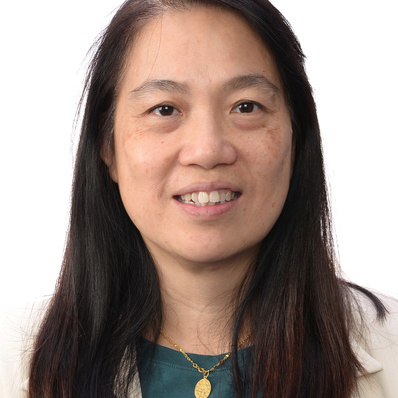
Karina Gin Yew-Hoong
Karina Gin Yew-Hoong is Provost's Chair Professor & Acting Head at the Department of Civil and Environmental Engineering at the National University of Singapore (NUS). She is a distinguished environmental engineer and water quality scientist whose research focuses on the fate, transport and impacts of contaminants in complex urban and tropical aquatic systems. She holds a bachelor’s degree in civil engineering from the University of Melbourne (1988), a master’s degree in engineering from NUS (1991), and a doctorate in science jointly from the Massachusetts Institute of Technology and the Woods Hole Oceanographic Institution (1996).
She specializes in water quality and ecosystem processes, with particular interest in the fate and transport of emerging microbial and chemical contaminants of concern. Her work integrates field observations, laboratory experimentation and predictive modelling to address microbial pollutants, emerging contaminants and ecosystem resilience within rapidly urbanizing environments.
Gin has served on several WHO Expert Panels on antimicrobial resistance, pathogens and microbial safety of water in food, drinking water and water reuse. She is a recipient of the Provost's Chair at NUS (2025–2027), the National Public Administration Medal (Bronze) for COVID-19 (2023), the COVID Resilience Medal (2023) and the Dean's Chair at NUS (2017–2019). Through her extensive international engagement and advisory roles, she contributes to advancing water quality management, environmental health frameworks and sustainable resource governance across Asia and globally.
Plenary Talk
The Silent Pandemic – Deciphering the Environmental Blueprint of Antimicrobial Resistance
While often viewed through a clinical lens, antimicrobial resistance (AMR) is a profound environmental crisis. The environment acts as both a reservoir for resistance genes and a critical pathway for their dissemination across humans, animals and ecosystems. As we approach the 2026 updates for Global Action Plans, the lack of integrated environmental data remains a major bottleneck in our “One Health” response.
In this plenary, we explore the intersection of environmental monitoring, predictive modeling and risk assessment to decode the environmental blueprint of AMR. We examine how anthropogenic activities in the urban water cycle — ranging from urban catchments, water and wastewater treatment plants to aquaculture — create selective pressures that accelerate the evolution of “superbugs.” We adopt an integrated approach combining microbiological and chemical determinants of AMR, capitalizing on the relative advantages of each to better capture the risk and health implications on ecosystem and public health. Advancements in Quantitative Microbial Risk Assessment (QMRA) and machine learning frameworks are highlighted, moving beyond simple threshold-based monitoring. Modern models now integrate spatiotemporal variables, climate change impacts (such as extreme flooding), and genomic data to identify high-risk environmental hotspots.
Transitioning from “silent” observation to active mitigation requires standardizing environmental surveillance and embedding these insights into policy. By quantifying the risks within our water, soil and air, we can transition from reactive clinical management to a proactive, evidence-based “One Health” strategy that safeguards both planetary and public health.
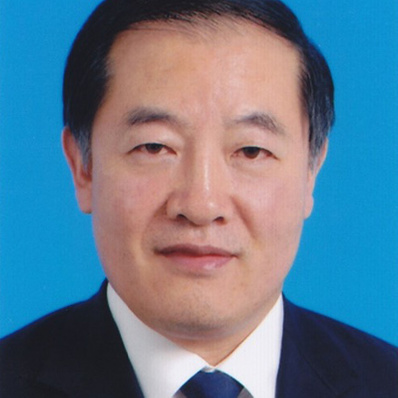
Guibin Jiang
Guibin Jiang is a professor at the Research Center for Eco-Environmental Sciences at the Chinese Academy of Sciences and internationally recognized leader in environmental chemistry and ecotoxicology, with pioneering contributions to the understanding of emerging contaminants and trace elements in the environment. His research focuses on the environmental behavior, transformation and biological effects of pollutants, including persistent organic pollutants, heavy metals and novel contaminants.
Jiang’s work integrates environmental chemistry, toxicology and risk assessment to better understand contaminant pathways, bioavailability and impacts on ecosystems and human health. His research has significantly advanced knowledge on contaminant fate and environmental exposure across the Asia-Pacific region and globally.
Through his scientific leadership and extensive international collaboration, he has contributed to strengthening environmental monitoring frameworks and risk-based environmental management. His work supports evidence-based environmental protection and sustainable environmental governance in rapidly developing regions.