Triple Planetary Crisis: Adding the Critical Missing Piece
Lorraine Maltby, University of Sheffield; Gertie Arts, Wageningen University and Research; Michelle Bloor, University of Glasgow; Tarryn L. Botha, University of Johannesburg; and Amanda Reichelt-Brushett, Southern Cross University
The recent SETAC World Congress in Johannesburg, South Africa, hosted a pivotal session focused on a major international initiative: the formation of the Intergovernmental Science-Panel on Chemicals, Waste and Pollution (ISP-CWP). This timely engagement underscores SETAC’s commitment to translating environmental science into global policy action. The session provided members with a comprehensive update through two key presentations: Tessa Goverse, Principal Coordinator and Head of the ISP-CWP Interim Secretariat provided by the United Nations Environment Programme (UNEP), detailed the background leading to the panel’s establishment and its core operational mandate. Amanda Reichelt-Brushett, SETAC President, described SETAC's role in the consultative process. Following the presentations, participants joined an interactive discussion session that identified some key topics for ISP-CWP to consider.
Why Is the ISP-CWP Important?
Addressing the triple planetary crisis – biodiversity loss, climate change and pollution – requires effective governmental action informed by robust science. The Intergovernmental Panel on Climate Change (IPCC), established in 1988, provides expert assessments on climate change. Similarly, the Intergovernmental Science-Policy Platform on Biodiversity and Ecosystem Services (IPBES), established in 2012, addresses biodiversity and nature loss. The establishment of the ISP-CWP in June 2025 completes this framework. The new panel is independent, hosted by UNEP, and is taking an interdisciplinary and multidisciplinary approach. It marks a critical step in tackling the pollution crisis and ensures a dedicated science-policy mechanism for pollution science. It also represents an excellent opportunity for SETAC members to contribute to global chemicals management and pollution prevention.
What Will the ISP-CWP Do?
The ISP-CWP’s core objective is to strengthen the science-policy interface to contribute to the sound management of chemicals and waste and pollution prevention. The panel is mandated to perform five key functions, with a particular focus on responding to the needs of developing countries:
- Horizon scanning: identifying relevant issues
- Assessments: Conducting assessments and identifying options
- Information and gaps: Providing up-to-date and relevant information and identifying critical research gaps
- Information sharing: Facilitating information exchange
- Capacity building: Enhance the capacities of scientists, policymakers and stakeholders to strengthen the science-policy interface
The panel has yet to agree on the rules of procedure and the process to determine the work program, including the submission and prioritization of topics. They may include assessments of groups of chemicals or sectors, risk or waste management issues, or cross-cutting issues.
How Has SETAC Contributed to Discussions?
To coordinate SETAC’s contributions to the crucial discussions leading to the formation of the ISP-CWP, the Chemicals Management (CheM) Advisory Panel, chaired by Michelle Bloor, was established. Throughout 2023–2024, the CheM panel undertook a global consultation, revisiting and evaluating topics from SETAC's previous Global Horizon Scanning Project (in 2018, 2018, 2019, 2019 and 2020) in the context of current and emerging environmental challenges. In addition, SETAC established an Affinity Group for the CheM Panel to collect input from the membership. The input from members informed formal written submissions by SETAC to the process establishing the ISP-CWP, grounded in three strategic themes:
- Global issues, local impacts: Highlighting that global chemical and waste issues require solutions tailored to local contexts
- Capacity building: Identifying and prioritizing essential needs to strengthen scientific capabilities worldwide
- Evidence-based prioritization: Stressing that priority-setting must be transparent and explicitly rooted in scientific evidence
The CheM panel also developed and submitted a priority-setting framework.
What Topics Should the ISP-CWP Prioritize?
During the session, SETAC World Congress attendees from Africa, Asia, Australasia, Europe, the Middle East and North America identified several key issues that the ISP-CWP could focus on, which are presented in Figure 1.
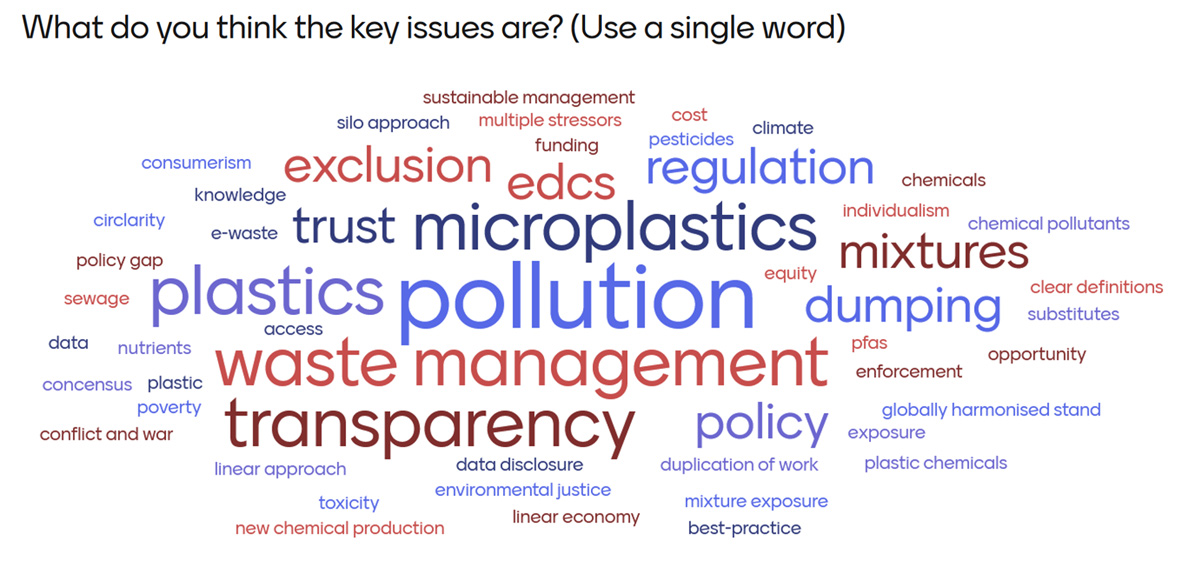
Figure 1: Word cloud generated via a survey of session participants during the SETAC World Congress in Johannesburg.
What Comes Next and How You Can Get Involved
SETAC member expertise is crucial to ensuring the panel's work is informed by the best available environmental science. Depending on the decisions made during the initial sessions of the plenary, the governing and decision-making body of the panel, there may be opportunities for SETAC members to contribute to the ISP-CWP by:
- Participating in the panel's work: Engage as authors, information and data contributors, or reviewers for panel assessments once the panel’s work program has been finalized
- Submitting written input: Provide written submissions (joint or individual) prior to plenary meetings on crucial topics
- Engaging policy channels: Work with national focal points and observers to channel SETAC science into the process
- Attending Plenary Sessions: Participate in plenary sessions as an observer.
- Serving on Expert Committees: Be nominated by a panel member to serve on the Interdisciplinary expert committee
The first session of the ISP-CWP Plenary will be held from 2–6 February 2026 in Geneva, Switzerland.
SETAC members interested in engaging with the ISP-CWP can play an important role in ensuring the panel's work is grounded in the best available environmental science. Please contact Lorraine Maltby or join the Affinity Group for the CheM Panel.
Beyond the ISP-CWP, SETAC members can also help guide SETAC's broader policy engagement. SETAC is launching a new Committee for Collaborations with International Organizations. This committee will advise the SETAC Board on alliances with international organizations that share our interest in advancing environmental science and promoting science-informed decision-making. More information and a call for applications to join this committee will follow soon.
Author’s contact: [email protected]