SETAC Europe German Language Branch Young Scientist Awards
Celebrating the Next Generation of Environmental Scientists
Heike Fremdt, SETAC Europe German Language Branch President
Supporting the next generation of environmental scientists is a core mission of the SETAC Europe German Language Branch (SETAC-GLB). Through its annual Young Scientist Awards, the branch not only recognizes outstanding research but also helps emerging scientists connect with the wider SETAC community.
Each year, the SETAC-GLB honors outstanding early-career research in environmental science and recognizes two exceptional contributions: the best dissertation (€3,000) and best diploma/magister/master thesis (€1,000). In line with SETAC-GLB guidelines, the prize money is purpose-bound for professional development (e.g. conference participation, teaching materials or professional training) and can be claimed, fully or partially, through the SETAC-GLB office. Eligible candidates submit their thesis, CV and a summary explaining the relevance of their work to SETAC topics, after which the GLB award committee conducts a competitive review.
The SETAC-GLB awards are an integral part of SETAC Europe’s efforts to build a strong community. As part of its support for regional branches, SETAC Europe offers each branch two annual meeting registration grants, which the branch allocates through its own competition process. The recipients of the 2025 GLB awards will therefore have the opportunity to attend the SETAC Europe Annual Meeting in Maastricht, which will enhance their integration into the European network.
Winner, Best Dissertation: Finnian Freeling
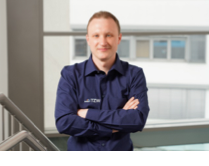
Finnian Freeling is a scientific staff member at TZW: DVGW-Technologiezentrum Wasser (German Water Centre) in Karlsruhe, Germany, and completed his Ph.D. research at the University of Koblenz.
His dissertation draws attention to a simple but important idea: when chemicals enter the environment, they don’t always stay the same. They break down into transformation products (TPs) that can behave very differently from the original compounds — sometimes more mobile, sometimes more persistent, sometimes more biologically active — and yet they are rarely considered in monitoring or regulation.
Freeling’s project combined method development, nationwide monitoring and targeted experiments to show that several TPs are widespread in German waters and that some are not efficiently removed by either conventional or advanced waste- and drinking water treatment processes. His work highlighted three practical concerns: diffuse atmospheric sources that deliver persistent residues to surface waters, surprisingly high levels of an overlooked inorganic contaminant in urban water cycles, and previously neglected drug metabolites that may be more relevant to aquatic organisms than the parent medicines. Beyond the data, the dissertation argues for better inclusion of TPs in monitoring programs and regulatory thinking — a message with direct relevance for water managers and policymakers.
Freeling plans to use the award to continue sharing his findings at conferences and to finance further training in statistical methods relevant to ecotoxicology.
Winner, Best Master Thesis: Elena Hommel
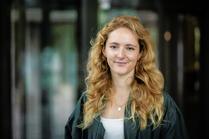
Elena Hommel is a PhD candidate at the Helmholtz Centre for Environmental Research (UFZ) in Leipzig, Germany. Her master thesis examined the Elbe as a whole system, following mixtures of organic micropollutants from upstream sources down to the North Sea. Instead of focusing only on single chemicals, Elena combined chemical analysis with effect-based bioassays — lab tests that reveal whether pollutant mixtures are likely to trigger biological responses relevant to ecosystems.
Her study used a Lagrangian sampling approach, tracking a parcel of river water as it moves downstream, and found that while many toxicological indicators stayed below concern thresholds, estrogenic activity exceeded effect-based trigger values at several locations — a signal that reproductive effects in fish cannot be ruled out in parts of the river. By identifying spatial hotspots and linking them to likely sources, Hommel’s work shows the value of combining biological effect testing with chemistry to prioritize monitoring and management actions.
Hommel intends to use the prize to support the continuation of her research and to attend conferences and training courses that strengthen bioanalytical skills.
Why These Awards Matter and What Comes Next
The two winning projects underscore complementary themes that are central to contemporary environmental protection:
- TPs: Chemicals do not remain stable in their original forms. Many breakdown products are common in the environment and can change exposure and risk patterns. If we only monitor parent compounds, we may miss important hazards.
- Mixture and effect-based assessment: Natural waters contain complex chemical mixtures. Bioassays and new approach methodologies help connect chemical presence to potential biological effects and can reveal risks that individual chemical testing misses.
SETAC-GLB’s decision to support both awardees’ attendance at the SETAC Europe 36th Annual Meeting in Maastricht is more than a travel stipend: it brings those research findings into dialogue with colleagues, regulators and water managers from across Europe. This exchange is essential for translating strong science into better monitoring strategies, improved treatment processes and smarter regulation. At the same time, it reflects the broader community role of SETAC-GLB: providing an open forum in the German-speaking region that connects early-career scientists with the wider SETAC network. By coupling scientific recognition with SETAC Europe's annual meeting participation, SETAC-GLB and SETAC Europe work together to ensure that promising researchers gain visibility, build professional networks and contribute to advancing environmental science across Europe.
Congratulations to Finnian Freeling and Elena Hommel for research that is rigorous, policy-relevant and useful for practitioners. Their work provides clear, actionable guidance for integrating transformation products and mixture-focused tools into the next generation of water quality monitoring and management.
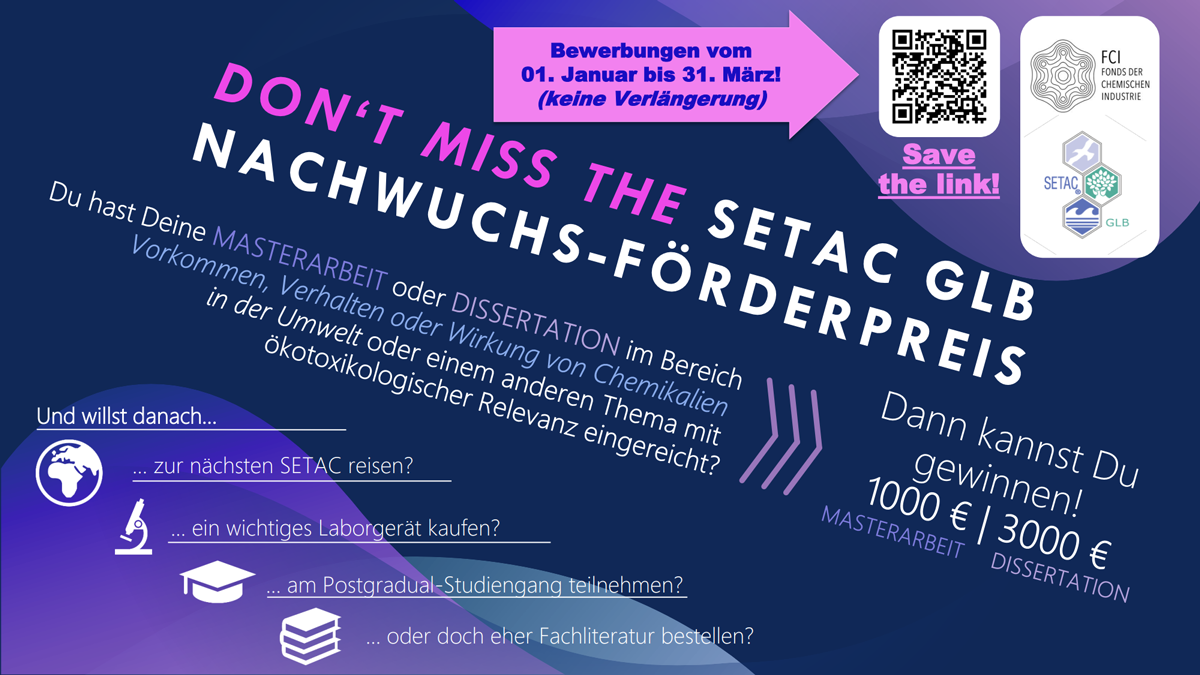
Have you finished your master or PhD thesis in 2025 in Germany, Austria or Switzerland? Then apply for the SETAC GLB Young Scientist Award!
Contact: [email protected]