NRDA Practitioners Share Experiences and Insights at SETAC Portland
Nadia Martin, Industrial Economics, Inc., and David Rouse, U.S. Fish and Wildlife Service
Natural Resource Damage Assessment (NRDA) is a science-based process, rooted in law and policy, under which U.S. states, federal agencies and tribal governments can assess injuries to natural resources caused by releases of hazardous substances and define the nature and scope of restoration needed to compensate for public losses. NRDA may be carried out under several legal authorities, including the Comprehensive Environmental Response, Compensation and Liability Act (CERCLA, also known as Superfund) and Oil Pollution Act (OPA). Environmental harms can also be pursued under international treaties and similar environmental regulations in countries outside the United States.
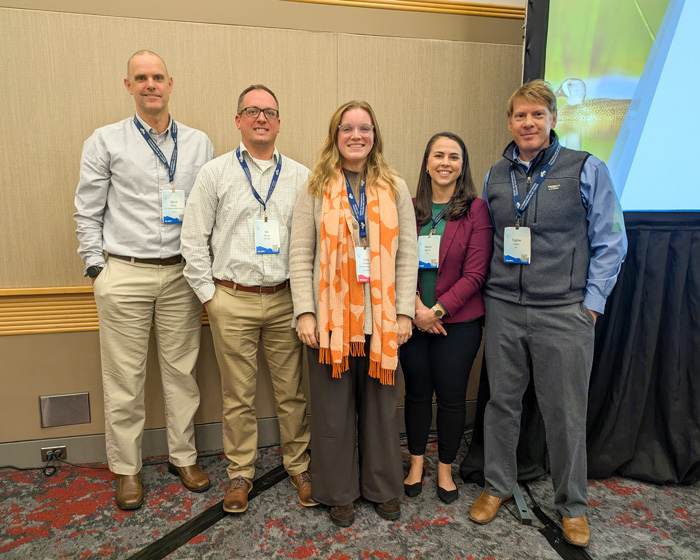
Representatives from government agencies, tribes, private consultants and international entities shared lessons, insights, and answered questions as part of the “Case Studies in Natural Resource Damage Assessment and Restoration” session at the SETAC North America 46th Annual Meeting in Portland, Oregon. The co-chairs began the session with an overview of the NRDA process, which led to more than 40 minutes of discussion on NRDA best practices, injury assessment approaches, and experiences related to implementing NRDAs in different states. After the discussion, there were four platform presentations on topics ranging from using machine learning, successful restoration outcomes, and leveraging insights from past NRDA settlements.
Emily Evenden, Industrial Economics, Inc., presented approaches to evaluating imagery in NRDA and other litigation support efforts utilizing machine learning. Aerial or satellite imagery is often used to characterize baseline or post-event habitat conditions, and machine learning can significantly reduce the time needed for these types of analyses. Evenden provided one legal case example where machine learning was used to map a changing forested environment to characterize deforestation. In another example, Evenden critiqued a responsible party’s claim that no agricultural losses had occurred based on a machine learning model evaluation of the area of interest. The machine learning models proved cost-effective, efficient and defensible; however, lessons learned include ensuring the model is trained on appropriate images and augmenting analyses with on-the-ground observations when possible.
Two presentations focused on settlements and the restoration side of NRDA cases. Christopher Lewis, Industrial Economics, Inc., shared lessons learned from the successful Duck and Otter Creeks NRDA, emphasizing the importance of readily available data and documentation of hazardous substance releases, pathways, and injuries; relationships among the trustees and other partners; and motivated responsible parties engaged in the process. He noted the availability of a compelling restoration project helped finalize the settlement.

William Reese, AECOM, discussed a creative settlement involving restoration on the Passaic River through a regenerative remediation project— the East Newark Waterfront Park. Under a crediting agreement, BASF, a responsible party for nearby NRDAs, applied credits generated from this project to offset natural resource damage liabilities. The project transformed an approximately five-acre publicly inaccessible vacant lot into a waterfront park that will bring natural environments and biodiversity, as well as a boardwalk, plaza and play area to provide the community with open space and waterfront access. Reese stressed the importance of public engagement in the process through the discussion of several artistic renderings and illustrations.
Nadia Martin, Industrial Economics, Inc., capped off the session discussing trends derived from a NRDA settlement database. Martin found that average settlement values have remained steady but vary by geography, resources impacted, and the volume of hazardous substance released (in the case of oil spills). Settlement values were often highest in the North and Southwest of the United States, driven by California and Alaska, where restoration costs are often high. Cases with threatened and endangered species or tribal losses, both of which are difficult to restore for and assess, proved to lead to higher settlement values. Oil spills with higher spill volumes also led to higher settlement values. Lastly, Martin noted that oil spill cases, on average, settled faster compared to hazardous waste site or CERCLA cases, which was an interesting insight into the complexity that comes with cases with more hazardous substances, habitats, resources, responsible parties and trustees. These insights and trends may help trustees and responsible parties decide how best to approach a given NRDA case and whether to pursue a comprehensive assessment process or a more streamlined approach.
Overall, the session provided a great opportunity for NRDA practitioners and others interested in damage assessments to discuss methodologies, successful approaches and lessons learned, as well as case studies. The session fostered discussion on cooperative assessments; identifying when to use machine learning, how to ensure reproducibility, and use of appropriate data sources and models; finding information on proven NRDA methodologies; data gaps in available settlement data; and how to determine whether to pursue a streamlined assessment.
Contact: [email protected]