SETAC Latin America Board of Director Candidates 2027
The SETAC Latin America Council is pleased to present to all full SETAC members residing in Latin America, a slate of candidates to join the board in 2027 for three-year terms.
Where the number of nominees equals the number of available positions (uncontested election), please vote to either Approve or Not Approve each nominated individual. To be elected, the nominee must receive more “Approve” votes than “Disapprove” votes.
Learn more about the candidates below.
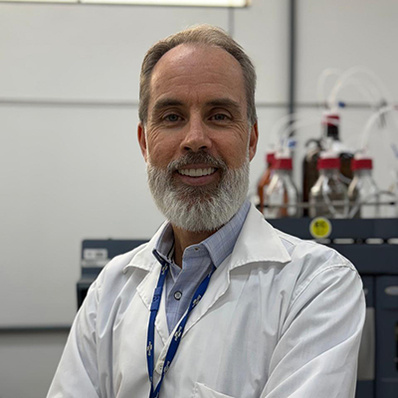
Romulo Penna Scorza Junior
Romulo Penna Scorza Junior is a senior researcher with more than two decades of experience in pesticide environmental risk assessment, environmental fate and transport, exposure modeling and pesticide residue monitoring in tropical agricultural systems. His work combines field experimentation, analytical chemistry, mathematical modeling and regulatory science to develop Brazilian exposure scenarios for aquatic and soil organisms and support evidence-based pesticide risk assessment. He has led and contributed to national and international research projects, published peer-reviewed and technical work, advised graduate students, reviewed manuscripts and research proposals and served on technical groups supporting environmental risk assessment in Brazil. Academic training includes a doctorate in environmental science from Wageningen University & Research, a master’s degree in agronomy from the Federal University of Lavras, an MBA in project management from the University of São Paulo and a bachelor’s degree in agronomy from the Federal University of Lavras.
Scorza Junior seeks to join the SETAC Latin America Council to strengthen the link between environmental toxicology, risk assessment and evidence-based policymaking. With experience in public service and regulatory environments, he aims to improve dialogue among academia, industry and government, support training for young professionals and public sector technical staff, expand regional cooperation and ensure that regulatory perspectives contribute meaningfully to SETAC’s strategic direction and impact.

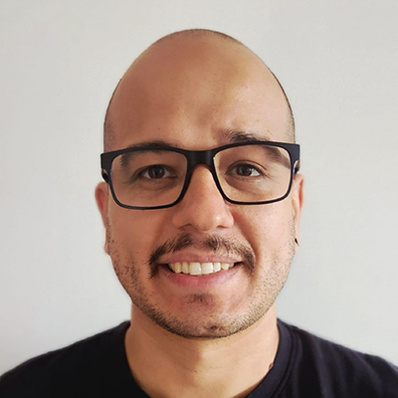
Deigo Viana
Deigo Viana is a professor of animal anatomy at the State University of the Tocantins Region of Maranhão in Brazil and a faculty member in the Graduate Program in Animal Science at the State University of Maranhão. He holds degrees in veterinary medicine and pedagogy, a master’s degree in animal science and a doctorate in sciences from the Faculty of Veterinary Medicine and Animal Science at the University of São Paulo. His research focuses on aquatic biodiversity, ecotoxicology, environmental conservation, fish biology and animal morphophysiology, linking scientific research with environmental monitoring, conservation and science education. He has authored more than 100 scientific articles and book chapters and reviews for international journals. Since 2020, he has coordinated Brazil’s National Science and Technology Week in Imperatriz with support from CNPq and founded the Maranhão Scientific Literacy Fair and the Biodiversity Conservation Olympiad to promote scientific literacy and environmental awareness.
Viana seeks a leadership role in SETAC Latin America to advance environmental science, support informed decision-making and strengthen regional collaboration. His priorities include expanding opportunities for early-career scientists, increasing participation from underrepresented areas of Latin America and encouraging knowledge exchange among researchers, students, government agencies and industry. He would bring experience in research, education, outreach and capacity building to the Council.
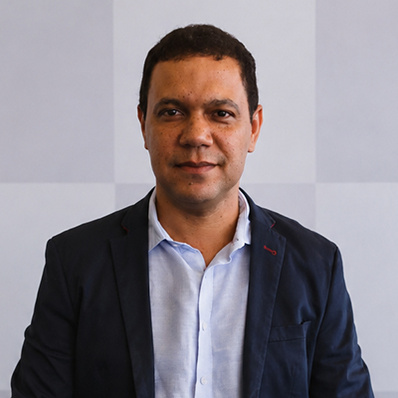
Gustavo Santos
Gustavo Santos holds a bachelor’s degree in biological sciences and master’s and doctoral degrees in ecology and conservation from the Federal University of Paraná. He is a global regulatory ecotoxicologist at Corteva Agriscience, with expertise in assessing risks from chemical agents to aquatic and terrestrial organisms and human health. Over 16 years in environmental safety, he has supported pesticide registration requirements across Latin America, developed and applied risk assessment methods for tropical regions and worked in aquatic and terrestrial ecotoxicology, environmental fate and transport modeling. He is certified as an environmental risk assessor by the International Board of Environmental Risk Assessors and serves as senior editor for Integrated Environmental Assessment and Management and associate editor for Ecotoxicology and Environmental Contamination. He also participates in technical and scientific groups, including CropLife Brasil, the PROHUMA Institute for Scientific Studies and the SETAC Latin America Scientific Committee.
Santos was moved to express interest in joining the Council because SETAC has played a central role in his professional development, beginning with student involvement and service as the first student representative on the SETAC Latin America Board from 2016–2017. He seeks to return to SETAC Latin America leadership to strengthen scientific excellence, expand member engagement, support early-career scientists and increase the society’s visibility and influence across the region.
Jairo Rodrigues
Jairo Rodrigues is a professor at the Federal University of the Jequitinhonha and Mucuri Valleys in Brazil, where he integrates research, teaching, university leadership and community engagement. He holds a doctorate in toxicology from the University of São Paulo, with research training at the University of Castilla-La Mancha in Spain. Research areas include environmental toxicology, environmental analytical chemistry, human biomonitoring, environmental monitoring, risk assessment and remediation of contaminated environments. He has coordinated multidisciplinary projects funded by CNPq, FAPEMIG and FINEP, established advanced analytical laboratories and supervised students from undergraduate through postdoctoral levels. SETAC has been central to Rodrigues’s scientific career, including organizing and teaching short courses, serving as session chair at SETAC Latin America meetings in Montevideo in 2023 and Lima in 2025 and supporting regional collaboration. He also serves on editorial boards and reviews for international journals.
Rodrigues seeks to serve on the SETAC Latin America Council to strengthen scientific excellence, interdisciplinary collaboration and evidence-based solutions across the region. Current leadership as director of the Institute of Science, Engineering and Technology has built experience in strategic planning, research infrastructure, partnerships and team management. He would focus on student and early-career engagement, international cooperation, cross-sector diversity and stronger connections among academia, government, industry and society.
Fabiana Lo Nostro
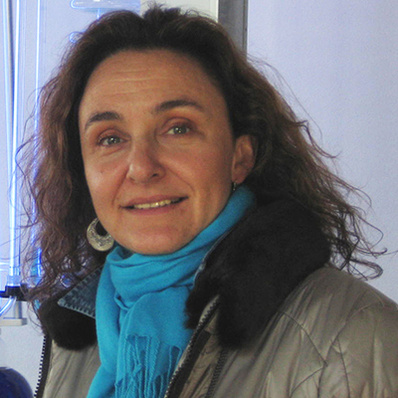
Fabiana Lo Nostro holds a doctorate in biological sciences from the University of Buenos Aires and is a principal investigator at CONICET. She is an associate professor at the university’s Faculty of Exact and Natural Sciences, where she teaches fish biology in the Department of Biodiversity and Experimental Biology, a department she previously chaired. She also teaches in the Fisheries and Aquaculture Specialization at the university’s veterinary faculty and in courses worldwide. Since 2010, Lo Nostro has led the Aquatic Ecotoxicology group at IBBEA, a joint University of Buenos Aires-CONICET institute, focusing on emerging contaminants and fish physiology. Her record includes more than 80 peer-reviewed publications and 200 conference presentations, along with extensive mentoring of undergraduate, doctoral and postdoctoral researchers. Her institutional leadership includes service as department director and council member, coordination of FONCyT research projects and advisory work for CONICET’s Marine Sciences Committee. She received the SETAC World Global Partner Capacity Building Award and academic recognition from the University of Buenos Aires.
Lo Nostro seeks to serve on the SETAC Latin America Council to strengthen the visibility and impact of regional research, foster collaboration and expand capacity-building opportunities for students and early-career scientists. She views Council service as a way to give back to SETAC while advancing science-informed environmental decisions in Latin America.
Boris Johnson Restrepo
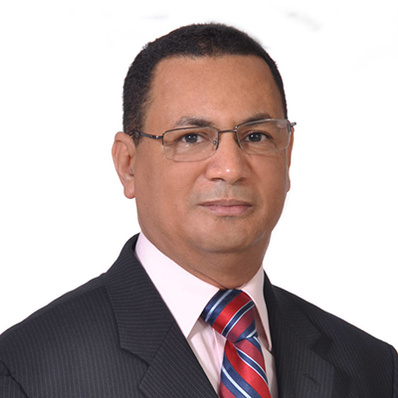
Boris Johnson Restrepo is a Colombian researcher specializing in environmental chemistry and public health. His work examines how chemical contaminants move through the environment and food chain and how they affect ecosystems and human health. He develops and applies analytical methods to detect trace elements and organic contaminants in environmental and biological samples. His research integrates human biomonitoring, exposure assessment and risk analysis, with attention to trace elements, persistent organic pollutants, endocrine-disrupting chemicals and emerging contaminants. By studying biomarkers in blood, urine and other biological samples, Johnson Restrepo works to identify exposure sources and pathways, characterize biological responses and clarify possible links between contaminants and adverse health outcomes. He has published more than 50 peer-reviewed articles and, as of 2026, has received more than 4,600 citations, with an h-index above 30.
Johnson Restrepo’s commitment to SETAC grew through his service as chair of the SETAC Latin America 13th Biennial Meeting, held September 2019 in Cartagena, Colombia. He seeks to serve on the Council to support inclusive, scientifically rigorous regional programs; increase participation from underrepresented countries and institutions; and strengthen opportunities for students and early-career scientists. He also hopes to foster stronger dialogue among academia, government and industry while helping SETAC Latin America expand its relevance and environmental impact.

Maria Valeria Ame
Maria Valeria Ame is an associate professor of food chemistry and ecotoxicology at the Faculty of Chemical Sciences at the National University of Córdoba and a principal researcher at Argentina’s National Scientific and Technical Research Council. Her research focuses on water quality assessment, environmental contamination and aquatic ecotoxicology, with emphasis on the occurrence, fate and distribution of cyanotoxins, pesticides, pharmaceuticals and personal care products, and microplastics in aquatic ecosystems. She leads the Laboratory of Research on Aquatic Pollution and Ecotoxicology, where chemical monitoring is integrated with molecular, biochemical and cellular biomarkers to characterize contaminant exposure, toxicity mechanisms and biological effects in native aquatic organisms, including algae, invertebrates and fish. The work also emphasizes contaminants and species relevant to food safety and human exposure.
Ame seeks to continue serving in SETAC Latin America governance because of the society’s role in strengthening environmental science, collaboration and capacity building across the region. Prior leadership experience has provided a broad understanding of SETAC Latin America’s activities and challenges. She hopes to support institutional continuity, promote meaningful participation by Latin American scientists and strengthen connections among researchers, students and stakeholders while contributing to an inclusive and scientifically strong regional community.