Highlights From the SETAC 14th YES Meeting
Bonnie Ertel, University of South Carolina Arnold School of Public Health; Katie Irhin, Virginia Tech; Mara Walters, Virginia Institute of Marine Science, William & Mary; Lola Renauer, University of South Carolina Arnold School of Public Health; Adam Wronski, Baylor University; Jessica Donaldson, University of Florida; and Kathryn Gabe, College of Charleston
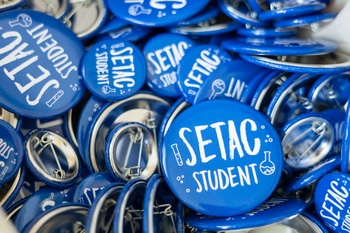
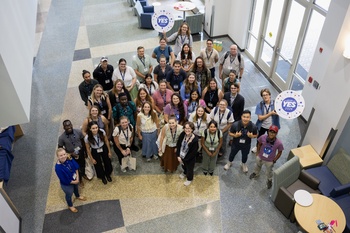
The SETAC 14th Young Environmental Scientists (YES) Meeting, held from 4 to 7 August at the University of South Carolina (USC) in Columbia, South Carolina, welcomed more than 85 students, early-career scientists and environmental professionals. Hosted by the SETAC North America Student Advisory Council (NASAC) in partnership with USC’s Arnold School of Public Health (ASPH), the meeting was a tremendous success! YES Meetings are unique in their “by students, for students” approach: All organizers and presenters are current students or early career scientists who graduated within the past three years. NASAC was especially grateful to host the event for the fourth time in North America and the first time since March 2020, bringing together the next generation of environmental scientists to learn, collaborate and build lasting professional connections.
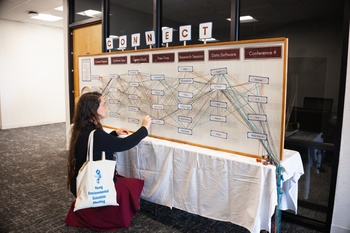
The meeting theme, “Uniting Students Through Connections,” captured the notion that networking and building connections are critical to the continued advancement of quality environmental management, particularly given the complex challenges confronting the global scientific community. This message was woven throughout the meeting, beginning with the welcome dinner and continuing through keynote presentations and a career panel, where invited speakers emphasized the importance of establishing a professional network. Participants had opportunities to build meaningful connections during networking breaks, scientific sessions and the informal student party. The theme was carried out through engaging activities, such as daily reflection questions — “What is your biggest fear while networking?” — and an interactive display board that visually demonstrated shared connections among distinct personal preferences. Together, these activities fostered a welcoming environment that encouraged conversation, collaboration and community-building.
The meeting kicked off on Tuesday afternoon at the ASPH Public Health Research Center with registration and welcoming remarks. To highlight the importance of connections and to help participants recognize common ties they already shared, attendees took part in an introductory icebreaker activity. Each person introduced themselves and shared a fun fact, with the goal of finding someone else in the room who shared that specific connection. By the end, participants could clearly see how scientific interests, hobbies, backgrounds and experiences connected the group, setting a collaborative tone for the rest of the meeting.
Then, participants chose from three concurrent activities: a mass spectroscopy short course led by Susan Richardson, USC Department of Chemistry; a litter cleanup along the Congaree River with Bill Stangler, Congaree Riverkeeper; or guided tours of three research laboratories led by ASPH faculty members Sean Norman, Laura Langan and Melissa Nolan.
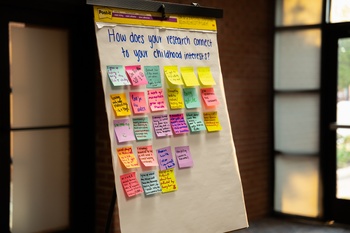
Tuesday concluded with a welcome dinner at the EdVenture Children’s Museum. Over a catered barbecue dinner that showcased Southern cuisine and hospitality, attendees had the opportunity to continue building connections in a relaxed setting. Jamelle Ellis, Theodore Roosevelt Conservation Partnership (TRCP), officially welcomed attendees to Columbia, while Austin Gray, Virginia Tech, reflected on the history of the SETAC YES Meeting in North America and encouraged students to embrace opportunities for leadership and service throughout their careers. The welcome dinner set an inspiring tone for the meeting and had participants considering the question “How does your research connect to your childhood interests?” Many took the time to reply on a colorful sticky note, with answers sharing common themes of loving the outdoors, water recreation and the ocean.
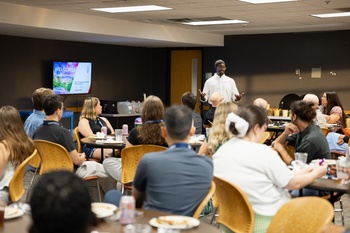
Wednesday morning began with remarks from the meeting planning team, an overview of SETAC from SETAC North America President Chris Stransky, and a keynote address by Tara Sabo-Attwood, Dean of the ASPH. Reflecting on past environmental successes, Sabo-Attwood encouraged attendees to view the challenges facing science today as opportunities for the future generation of scientists to make a meaningful impact. Both speakers emphasized the continued need for high-quality science and emboldened students to remain engaged and resilient throughout their careers. Stransky also hosted an open conversation on Thursday afternoon to share current perspectives and learn more about how SETAC can help advocate for students.
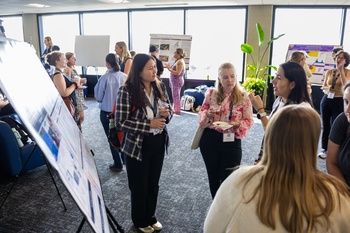
Student presentations were the main highlight of the meeting. An essential goal of the YES Meeting is to provide a space for young scientists to practice communication skills and receive feedback from their peers. As such, all students had to give either a platform or poster presentation at the meeting. NASAC student volunteers reviewed abstracts and sorted them into sessions by topic, which included Analytical Challenges in Environmental Science; Contaminants of Emerging Concern — Microplastics, PFAS, Pharmaceuticals and More; Aquatic Toxicology; One Health; Policy, Management, and Communication; and New Approach Methodologies. Scientific platform sessions were held concurrently over Wednesday and Thursday, providing opportunities for sparking discussion with speakers and attendees. Attendees could view poster presentations all day Wednesday before a lively poster social featuring scientific exchange and networking.
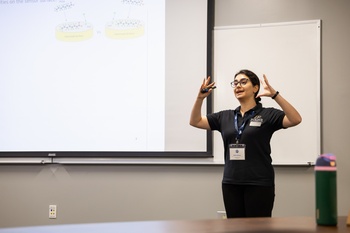
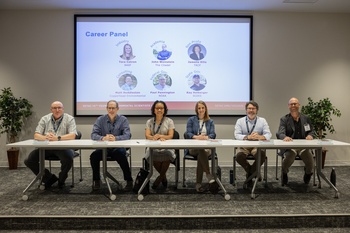
On Wednesday afternoon, panelists from industry, academia, nonprofits, consulting and government came together to outline their career journeys and offer helpful tips to encourage the next generation. Specifically, students heard from Tara Catron, BASF; John Weinstein, The Citadel; Jamelle Ellis, TRCP; Matt Huddleston, Copperhead Environmental Consulting; Ray Holberger, South Carolina Department of Environmental Services (SCDES); and Paul Pennington, National Oceanic and Atmospheric Administration. After panelists introduced their own career paths, an engaging Q&A session allowed students to inquire about further sector-specific advice. Some takeaways from this conversation included the importance of mentorship, the advice to take advantage of new opportunities and the reminder that no two career paths look alike.
Thursday morning began with an inspiring keynote from Imari Walker-Franklin, RTI International. She presented an overview of her journey from a curious undergraduate student to a research scientist, science communicator and author of the book “Plastics,” which she signed for attendees afterward. Continuing the theme of female leadership and perspectives in science, Thursday afternoon featured a Women in STEM lunch. Attendees first talked through discussion questions in groups. Then three speakers — Emily Osborne, South Carolina Sea Grant Consortium; Beata Dewitt, SCDES; and Nadia Martin, IEc — shared their experiences navigating careers as women in STEM.
In addition to providing a welcoming environment for students to develop their presentation skills, the YES Meeting aims to provide opportunities for training and skill development. This year was no exception, as students were able to select from a number of short courses offered on Thursday afternoon and Friday morning. Tamara Sorell and Ryan Jones, associates from Brown and Caldwell, hosted an “Introduction to Risk Assessments” course, which provided an engaging overview of human health and ecological risk assessment by covering real-world applications, case studies and basic published guidance. Bryan Brooks, Baylor University, who currently serves as editor-in-chief of Environmental Science & Technology Letters and is a SETAC Fellow, hosted a short course on “Publishing Your Research,” which provided advice for navigating the publication process. Joseph H. Bisesi Jr., University of Florida, and Kirsten Overdahl, USC ASPH, hosted a short course on “Omics Approaches for Environmental Toxicology Research,” which introduced several omics approaches commonly used in environmental toxicity studies. Heath Kelsey and Sidney Anderson with the University of Maryland Center for Environmental Science Integration and Application Network hosted a “Science Communication” short course, which covered the principles of stakeholder engagement and tips for effective science communication.
The meeting ended on Friday with a closing ceremony, which recapped the week’s highlights and encouraged students to stay connected. Winners of the Student Choice Presentation Awards were also announced. Congratulations to Miriam Boucher, Clemson University, for Best Platform Presentation and to Akinola Ewuola, Temple University; Carolyn Willmore, USC ASPH; and Kevin Doheny, Rhineland-Palatinate Technical University Kaiserslautern-Landau, for a three-way tie for Best Poster Presentation! To bring the meeting to a close, Geoff Scott, USC ASPH, gave a brief overview of the last several decades of ecotoxicology research and emphasized the value of establishing personal connections, like those made at the YES Meeting, to advance the future of environmental research.
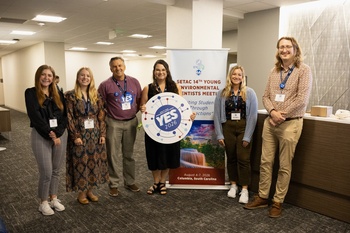
We are extremely grateful to all who helped make this meeting a success, including our generous sponsors, keynote speakers, panelists, workshop mentors, meeting attendees, session chairs, NASAC volunteers and the planning committee: Bonnie Ertel, USC ASPH, and Katie Irhin, Virginia Tech, as Meeting Co-Chairs; Mara Walters, Virginia Institute of Marine Science, William & Mary, as Scientific Chair; Lola Renauer, USC ASPH, as Local Organizing Chair; Jessica Donaldson, University of Florida, as Volunteer Coordinator; and Adam Wronski, Baylor University, as Meeting Coordinator. Huge thanks to Katie Gabe, College of Charleston, who served as our meeting photographer. We would also like to thank SETAC North America for its financial and staff support and for entrusting us to host this meeting for the students of SETAC.
If you think your university would be a good location for a future YES Meeting, please reach out, as planning for YES 2028 will start soon. In the meantime, look out for the SETAC 15th YES Meeting to be held in Prague, Czechia, in the summer of 2027!
Contact: [email protected]